Sustainability Strategy for Companies: How to Lead the Change
In recent years, corporate sustainability strategy has gained strong relevance due to its impact on the planet, corporate reputation, and increasing regulatory pressure. 🌍📈📑
However, within sustainability strategies for companies, there is a critical area that remains largely overlooked: ocean sustainability. 🌊🚫🔍
Despite its growing importance, this remains an underutilized opportunity for companies aiming not only to make a difference but also to align with ESG (Environmental, Social, Governance) principles and the United Nations’ Sustainable Development Goals (SDGs).
Why Your Company Needs a Solid Sustainability Strategy
Having a sustainability strategy for companies is no longer optional—it’s a must for operating ethically, responsibly, and competitively. Investing in sustainability boosts reputation, opens business opportunities, and meets the demands of consumers, investors, and regulations that call for clear commitments to reducing environmental impact.
CSR and ESG: Two Approaches to Building Responsible Businesses
Both approaches promote corporate responsibility, but they differ in structure and purpose.
🤝 Key Differences Between CSR and ESG
CSR (Corporate Social Responsibility) typically focuses on voluntary initiatives with a strong reputational component, representing a company’s ethical commitment to the community and environment. In contrast, ESG is a more structured and measurable strategy based on three pillars: environmental, social, and governance. It’s evaluated by investors and directly linked to risk and opportunity management.
🧩 Which One Fits Best in Your Sustainable Business Strategy?
Integrating both approaches into your corporate sustainability strategy can lead to a deeper impact aligned with the SDGs, especially SDG 14, which focuses on marine conservation. The key lies in combining the best of both to build an effective, long-term sustainability roadmap.

How to Integrate Marine Sustainability into Your Business Strategy
Many companies still overlook the essential role oceans play in global sustainability. Industries like tourism, energy, biotechnology, and food production are directly affected by the health of marine environments. Including ocean health in your business’s sustainability strategy is not only responsible—it’s strategic.
🧪 Practical Solutions Aligned with SDG 14
Actions such as removing marine plastic waste and recycling ocean-sourced materials are powerful ways companies can align with SDG 14. These initiatives can support both ethical commitments (CSR) and environmental risk management (ESG).
🔄 Circular Economy Applied to the Marine Environment
Reusing recycled materials from the ocean is a way to support the circular economy, reduce pollution, and generate new economic value from what was once considered waste.
Gravity Wave: The Partner for Companies Seeking Real Impact
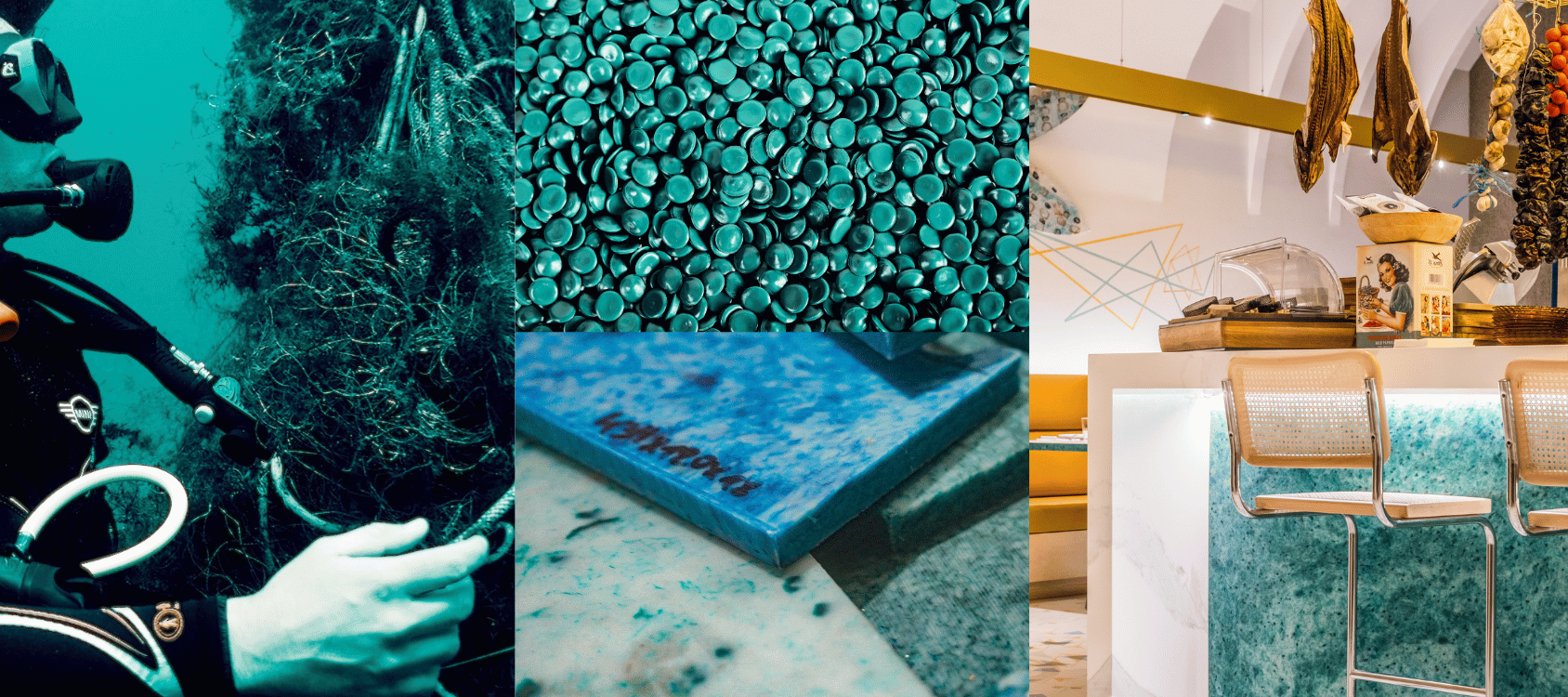
At Gravity Wave, we promote a circular economy through sustainable solutions connected to the sea. We recover ocean plastic and transform it into valuable products, helping companies integrate SDG 14 in a practical and visible way within their sustainability strategy.
♻️ Turning Marine Plastic into Business Value
Our approach covers the entire process—from collection and recycling to transforming recovered material—creating real environmental impact and new business opportunities for our partners.
📦 From Waste to Resources: Sustainable Products for Your Brand
Through partnerships with leading companies, we transform ocean plastic waste into useful items, recycled materials, and sustainable communication tools for brand storytelling.
Why Are Companies Joining This Sustainability Mission?
Based on a 2024 Gravity Wave survey of 250 partner companies:
72.7% aim to strengthen their sustainability and CSR strategy.
63.6% are driven by leadership’s personal convictions.
54.5% want to meet customer expectations.
These results show that companies aren’t just ticking boxes—they genuinely want to play an active role in regenerating the planet.
Benefits of Integrating SDG 14 into Your Corporate Sustainability Strategy
Integrating SDG 14 into an ESG or CSR-based sustainability strategy goes beyond ecological awareness—it means recognizing the economic and social value of healthy oceans. Yet, most companies still fail to see oceans as a strategic asset.
Spain’s Outlook
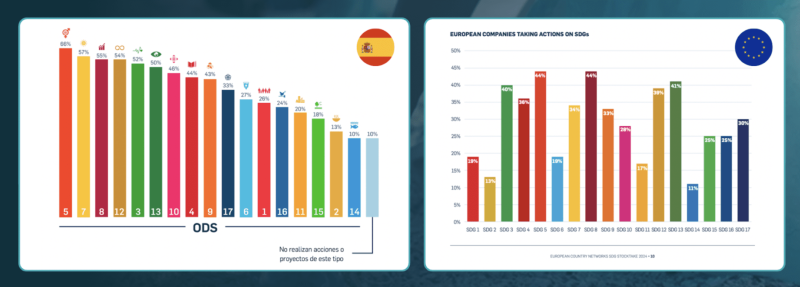
According to the 2024 Global Compact Spain Consultation, only 10% of companies actively contribute to SDG 14. This low figure reflects a lack of awareness about the marine ecosystem’s impact and its relevance in sectors far beyond fishing. Companies still do not view the oceans as a strategic priority in their sustainability agendas.
Europe’s Outlook
The situation isn’t better across Europe. The 2024 European SDG & Business Barometer by the Global Compact reveals that only 11% of companies are involved in initiatives supporting ocean conservation. Despite growing interest in sustainability, marine life conservation remains an unresolved issue on many business agendas.