
Plastic CO2 Emissions: How Do They Impact the Environment and What Can Companies Do to Reduce Them?
Did you know that the plastic industry is responsible for approximately 4% of global CO2 emissions? That’s equivalent to 3.7 gigatons per year—an alarming figure, but also an opportunity. Companies, especially those incorporating plastics into their supply chains, have the power to reduce this impact and contribute to a more sustainable future. From plastic manufacturers to businesses using plastics in their products, every decision matters.
At Gravity Wave, we work with recycled plastics made from fishing nets recovered from the sea and ports, helping to reduce plastic CO2 emissions. In this article, we explore the impact of plastic CO2 emissions, how they affect the planet, and—most importantly—what companies can do to minimize them.
3.7 gigatons per year
What Are Plastic CO2 Emissions?
What Are Plastic CO2 Emissions?
The plastic emissions of a product measure the amount of greenhouse gases (GHG), such as carbon dioxide (CO2), released throughout its lifecycle. This includes everything from raw material extraction to final disposal. Simply put, it refers to all CO2 emissions generated during the production, transportation, use, and disposal of a plastic product.
Plastic production is a major contributor to global emissions. According to the International Energy Agency (IEA), the plastic industry accounts for approximately 4% of global CO2 emissions, with an estimated 3.7 gigatons per year, as reported by Science Daily.
While exact figures may vary depending on methodologies and timeframes, these estimates highlight the significant impact of plastic carbon emissions on global greenhouse gas levels.
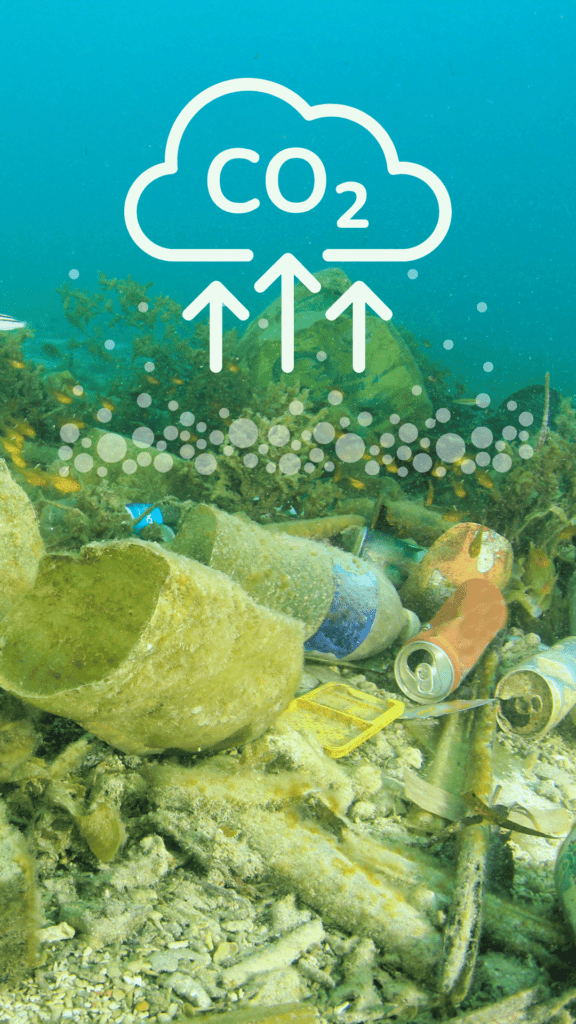
Factors That Increase Plastic carbon Emissions
Production materials: Most conventional plastics are derived from petroleum and natural gas, meaning that the extraction and processing of these resources generate large amounts of CO2. A recent University of California (2024) report estimates that petroleum extraction for plastic production accounts for around 30% of the industry’s total CO2 emissions.
Logistics Impact: Beyond production-related emissions, plastic transportation plays a significant role in its carbon footprint. Virgin plastics are often manufactured in low-cost regions like Asia and then exported across continents, leading to high carbon footprints from maritime and land transportation. This logistical impact highlights the need for more localized and sustainable production models.
Waste and Recycling: While plastic recycling rates have improved, they remain insufficient. Only 9% of all plastics produced globally are properly recycled. This low recycling rate leads to higher demand for virgin plastics, resulting in more emissions from plastic manufacturing (World Economic Forum).
End-of-Life Impact: The final disposal of plastics is another key factor. If incinerated or sent to landfills, they release additional greenhouse gases, further increasing their carbon footprint. Studies estimate that plastic incineration is a major source of additional carbon emissions, depending on how it is managed (Science Daily).
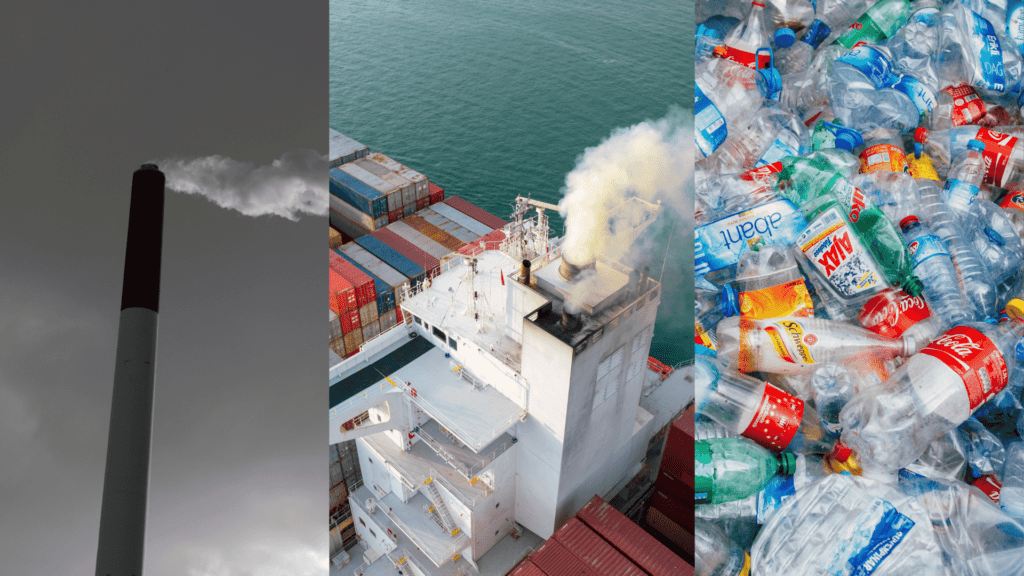
The relationship between plastic carbon emissions and plastic waste
This is where the direct relationship between CO2 and plastic waste comes into play. Plastic waste is not just about the volume of plastic produced or consumed—it also includes the carbon emissions generated throughout its lifecycle.
This impact extends beyond production to transportation, usage, and especially disposal. The more plastic produced from virgin sources, the higher the associated CO2 emissions. On the other hand, recycling and using recycled materials, such as plastics made from recovered fishing nets.
How can plastic carbon emissions be reduced in manufacturing?
As suppliers of recycled plastics made from recovered fishing nets, we implement effective strategies to reduce plastic CO2 emissions:
- Use of Recycled Materials: Replacing virgin plastics with recycled plastics significantly lowers CO2 emissions by avoiding fossil fuel extraction.
- Circular Economy: Promoting recycling and reuse minimizes the need for new plastic production, reducing its environmental impact.
- Renewable Energy: Using clean energy sources in plastic manufacturing helps cut greenhouse gas emissions.
- Design for Recycling: Creating plastics that are easily recyclable or biodegradable improves sustainability and recycling efficiency.
- The Value of Recovered Fishing Nets: Reusing discarded fishing nets prevents ocean pollution and reduces the need for new plastic production, further lowering plastic CO2 emissions (World Economic Forum).
How Much CO2 Does Gravity Wave Save by Using Recycled Raw Materials (Recycled Pellets)?
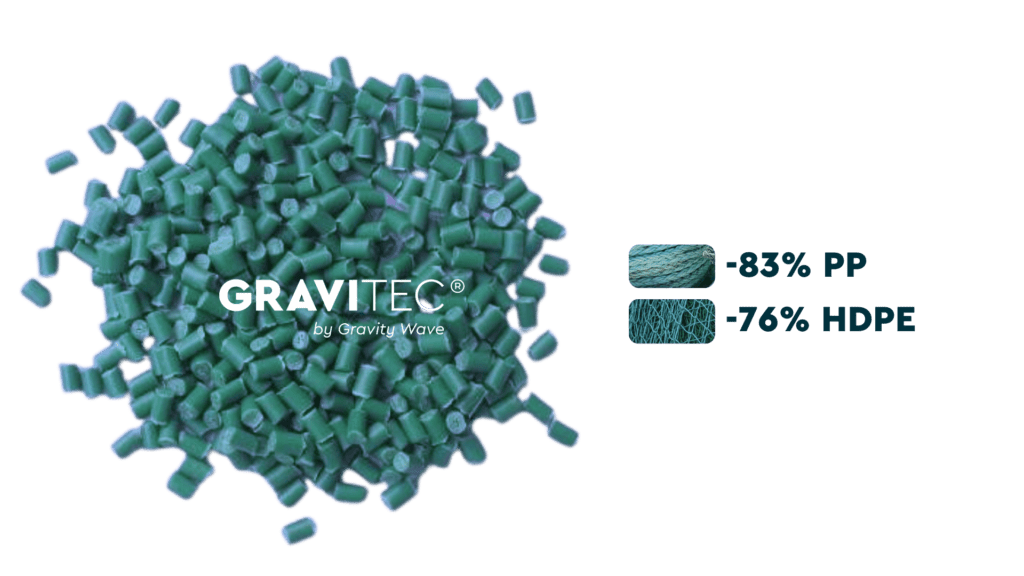
At Gravity Wave, we recover plastic from the sea and ports—specifically fishing nets—and reintegrate it into the circular economy in the form of recycled plastic pellets. Our goal is to reduce dependence on virgin raw materials, using polypropylene (PP) and high-density polyethylene (HDPE) recyclates.
- Recycled PP generates 83% fewer CO2 emissions compared to virgin plastic.
- Recycled HDPE reduces emissions by 76%.
This means that for every ton of recycled PP, we save 4,950 kg of CO2, and with recycled HDPE, we prevent 4,120 kg of CO2 emissions. Additionally, we give plastic a second life, promoting a circular economy and helping to reduce pollution.
Plastic CO2 Emissions: An Opportunity for Businesses
Reducing plastic carbon footprint is not just an environmental responsibility—it’s also a strategic opportunity for businesses. As consumers become increasingly aware of environmental issues, companies that adopt sustainable practices gain a competitive advantage. Using recycled plastics, such as those derived from recovered fishing nets, not only reduces environmental impact but also positions businesses as leaders in innovation and social responsibility.
Embracing sustainable solutions and transitioning toward a circular economy is not just an investment in the planet’s future—it’s an investment in your company’s future. By integrating these changes into your business model, you can lower emissions and make a meaningful impact on a greener future.